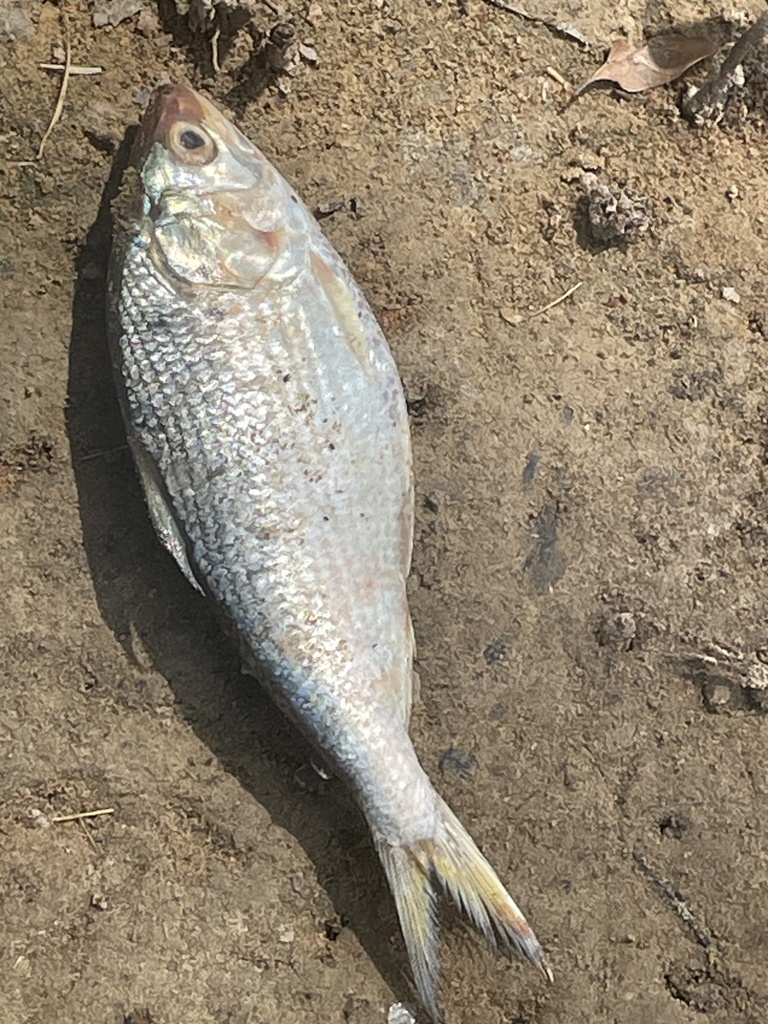
The Bonga (Ethmalosa fimbriata) is a fish that lives in both fresh and salt water of the family Clupeidae that grows up to 46 cm.
Description
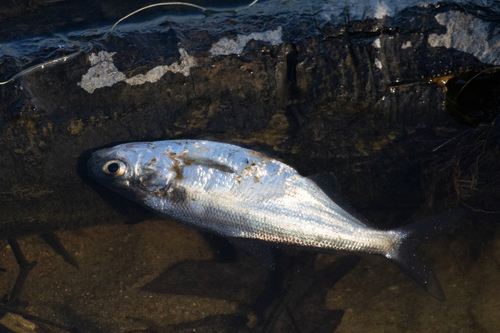
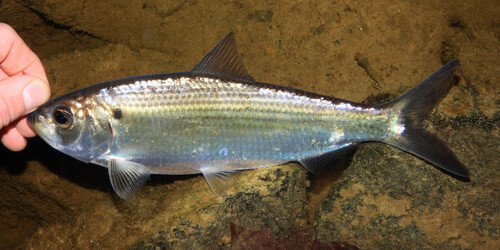
The bonga shad is a clupeid of the family Clupeidae reaching about 46 cm. The compressed, fairly deep body has keeled belly scutes, golden tints and a faint dark spot behind the gill cover; the upper jaw bears a notch into which the tip of the lower jaw fits. The species is a filter feeder that sieves phytoplankton, chiefly diatoms, from the water with very fine gill rakers. It lives pelagically in shallow coastal waters, lagoons and estuaries of the eastern central Atlantic and sometimes enters freshwater rivers. The bonga shad forms large schools and is a very important and sought-after food fish in West Africa.
Frequently asked questions
How do you recognise the Bonga?
The Bonga has a torpedo-shaped body, is mainly yellow-gold and shows a plain pattern.
Where does the Bonga live?
The Bonga lives in both fresh and salt water and is mostly found around open water.
How big does the Bonga get?
The Bonga grows to a maximum of about 46 cm. On average the species is around 25 cm.
Is the Bonga dangerous to humans?
No, the Bonga is harmless to humans.
Is the Bonga edible?
Yes, the Bonga is a highly prized food fish.
Download Fin's Fish Guide
Identify fish in seconds, log your catches and dives. Join the TestFlight beta.
All data
Identification
Appearance
Habitat & distribution
Behaviour & biology
For anglers
Safety
Status & sources
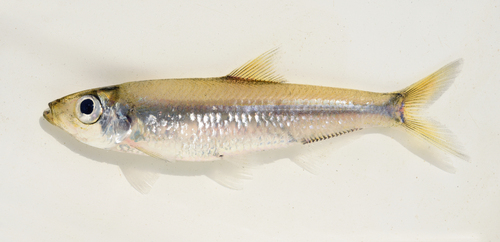
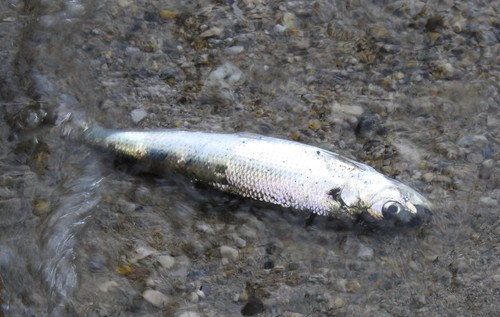
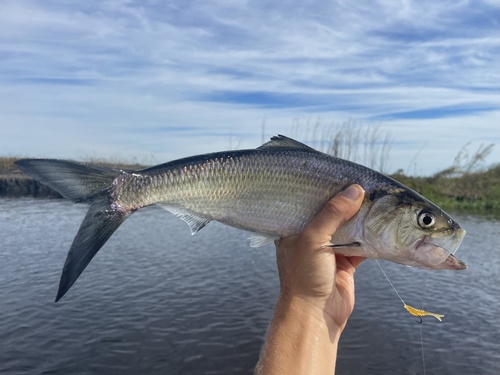
More from the family Clupeidae

Download Fin's Fish Guide
Identify fish in seconds, log your catches and dives. Join the TestFlight beta.