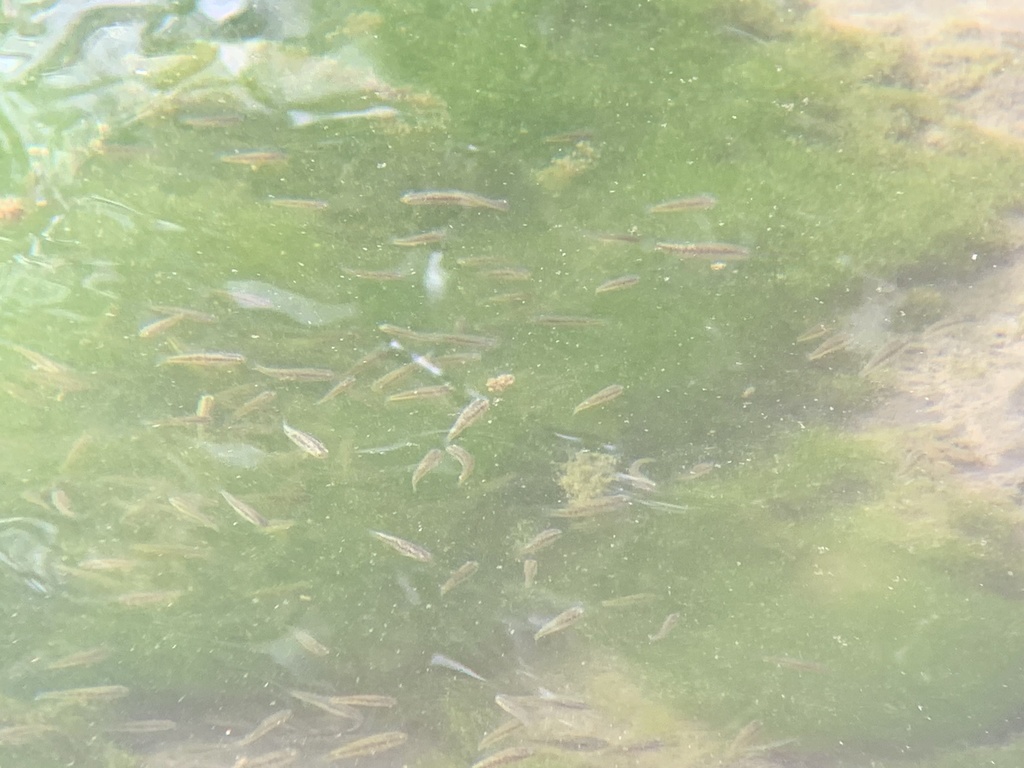
The Pahrump poolfish (Empetrichthys latos) is a freshwater fish of the family Goodeidae that grows up to 6 cm.
Description
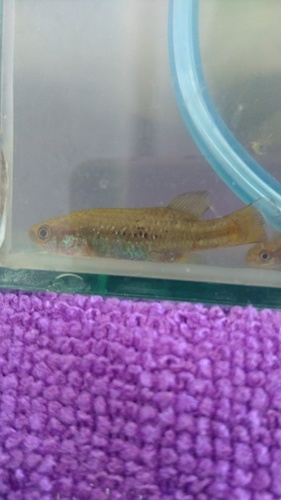
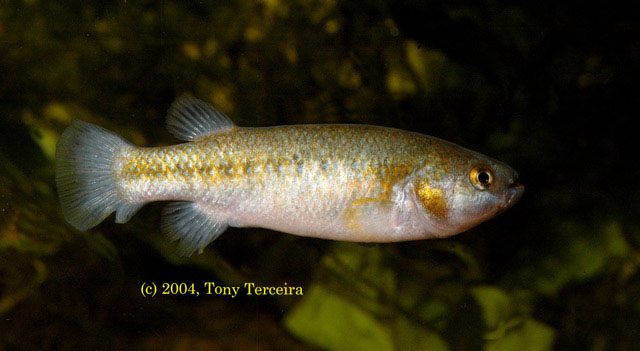
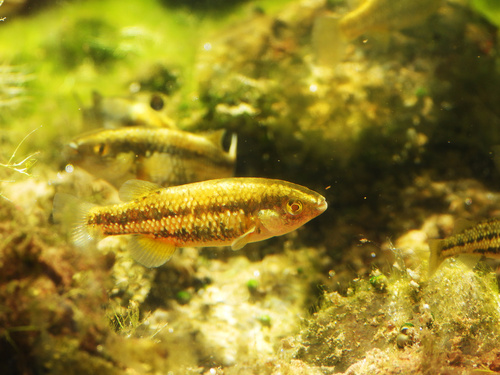
The Pahrump poolfish is a small egg-laying killifish (Goodeidae) that was native only to spring pools of the Pahrump Valley in Nevada, in the western United States. The species grows to about 6 cm and has a stocky, olive-grey body without pelvic fins. Through the drying of its springs the original population went extinct; the species survives thanks to translocated refuge populations and is critically endangered. It eats algae, small invertebrates and detritus. The fish is harmless to humans.
Frequently asked questions
How do you recognise the Pahrump poolfish?
The Pahrump poolfish has an elongate, eel-like body and is mainly green.
Where does the Pahrump poolfish live?
The Pahrump poolfish lives in fresh water and is mostly found around sand or mud bottom.
How big does the Pahrump poolfish get?
The Pahrump poolfish grows to a maximum of about 6 cm.
Is the Pahrump poolfish dangerous to humans?
No, the Pahrump poolfish is harmless to humans.
Download Fin's Fish Guide
Identify fish in seconds, log your catches and dives. Join the TestFlight beta.
All data
Identification
Appearance
Habitat & distribution
Behaviour & biology
For anglers
Safety
Status & sources
More from the family Goodeidae
Download Fin's Fish Guide
Identify fish in seconds, log your catches and dives. Join the TestFlight beta.