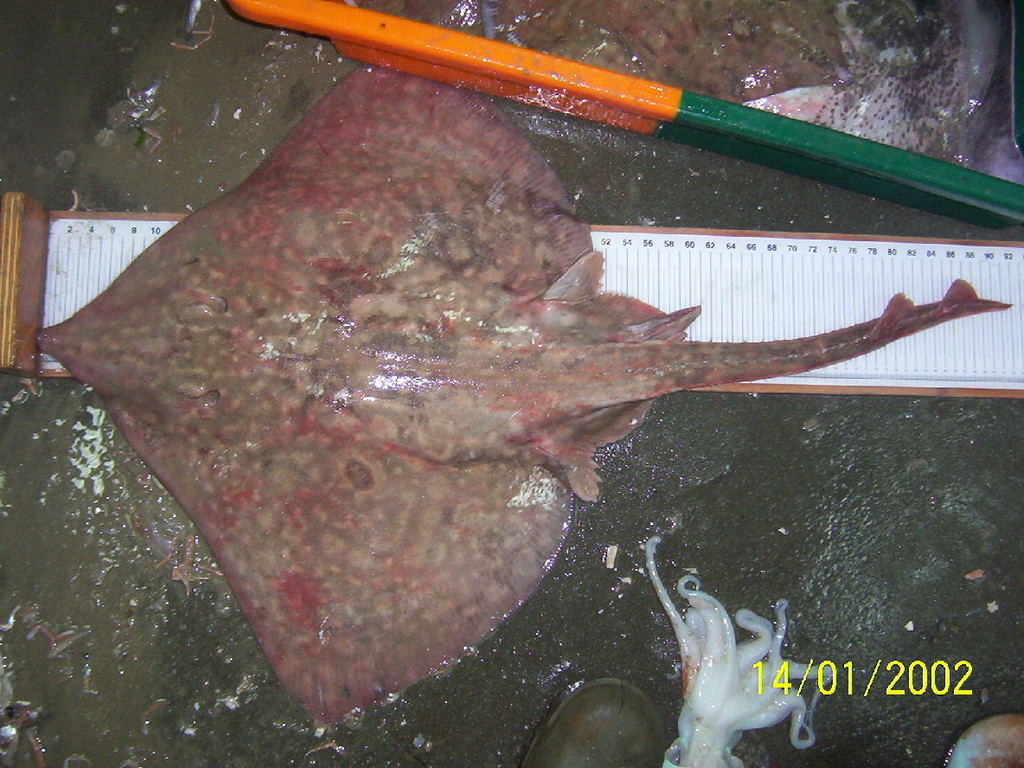
The Common skate (Dipturus batis) is a saltwater fish of the family Rajidae that grows up to 285 cm.
Description
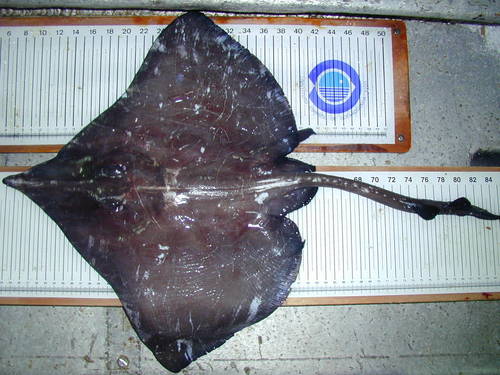
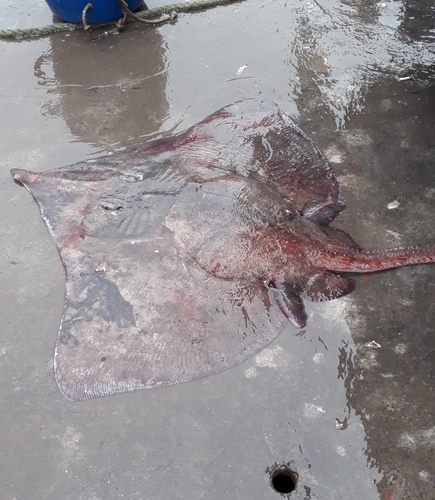
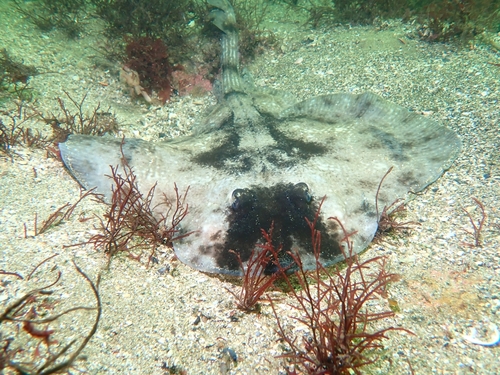
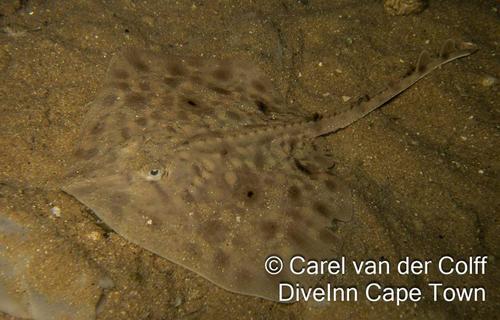
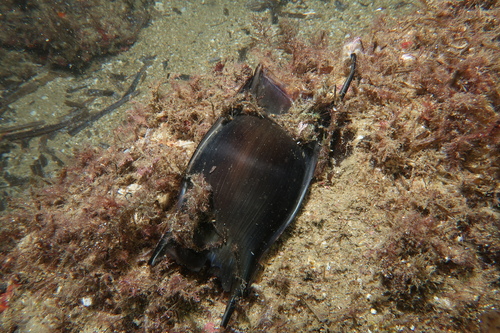
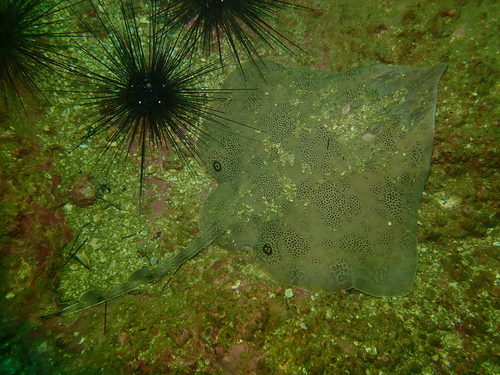
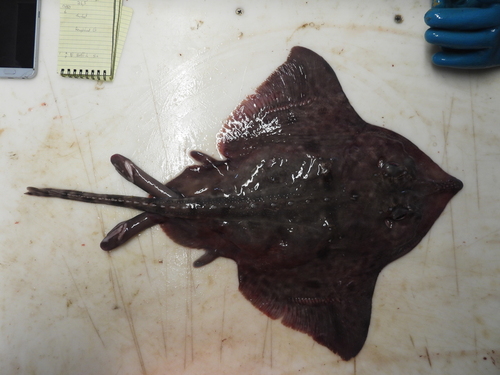
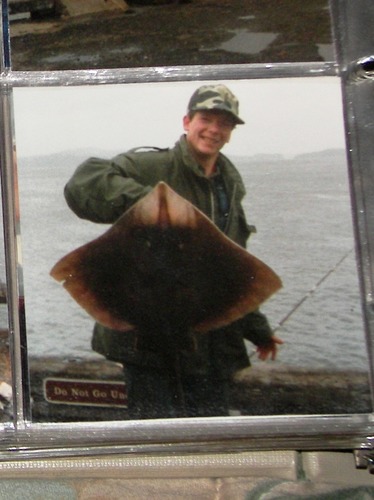
The common skate is the largest ray in Europe; this flat cartilaginous fish of the family Rajidae reaches a wingspan of nearly 3 metres. The diamond-shaped body, formed by the pectoral fins fused to the head, has a long, pointed snout and is grey-brown to greenish with pale spots; a row of spines runs along the tail. The species lives on sand and mud bottoms of the north-eastern Atlantic, where it hunts bottom fish, crabs and lobsters. It lives more than fifty years, matures late and lays large egg cases. Because of this slow life history the common skate has almost vanished from the North Sea through fishing and is assessed as Critically Endangered (CR); in the EU it is strictly protected.
Frequently asked questions
How do you recognise the Common skate?
The Common skate has an irregular in shape body, is mainly brown and shows a spots pattern.
Where does the Common skate live?
The Common skate lives in the sea (marine waters) and is mostly found around sand or mud bottom.
How big does the Common skate get?
The Common skate grows to a maximum of about 285 cm. On average the species is around 100 cm.
Is the Common skate dangerous to humans?
No, the Common skate is harmless to humans.
Is the Common skate edible?
The Common skate is not usually eaten.
Download Fin's Fish Guide
Identify fish in seconds, log your catches and dives. Join the TestFlight beta.
All data
Identification
Appearance
Habitat & distribution
Behaviour & biology
For anglers
Safety
Status & sources
Same genus Dipturus

More from the family Rajidae
Download Fin's Fish Guide
Identify fish in seconds, log your catches and dives. Join the TestFlight beta.