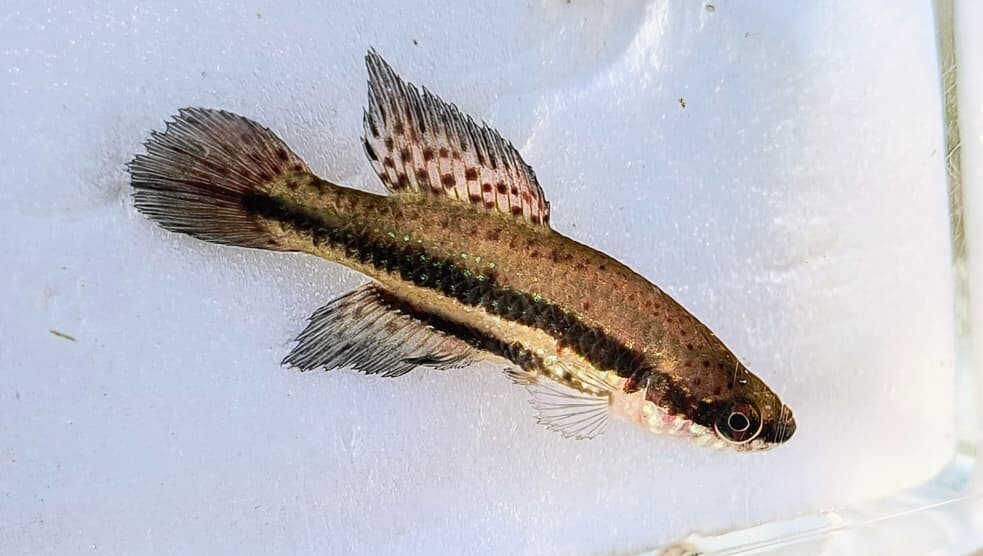
The Fighting gaucho (Cynopoecilus melanotaenia) is a freshwater fish of the family Rivulidae that grows up to 4 cm.
Description
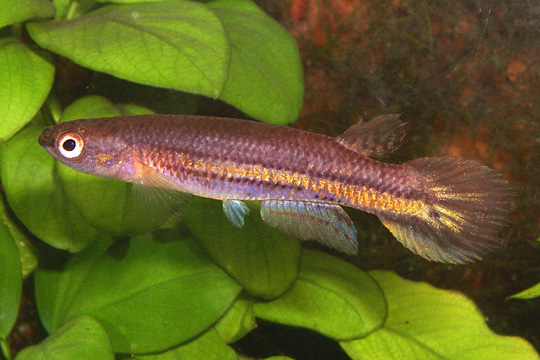
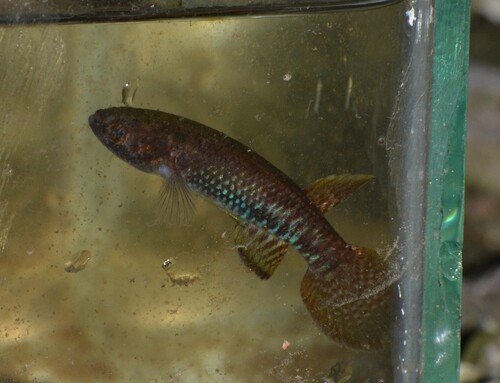
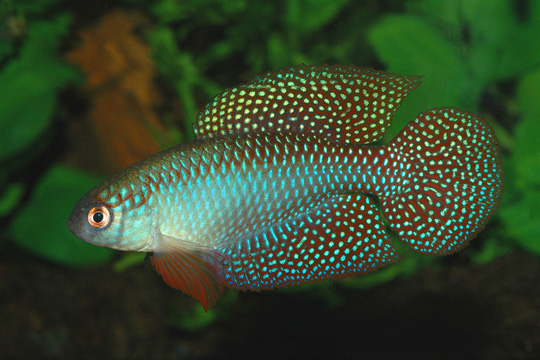
The fighting gaucho is an annual killifish (Rivulidae) from fresh water of southern Brazil and Uruguay. The species grows to about 4 cm; males are handsomely coloured with dark bands and glowing spots, females duller. It lives in temporary pools that dry up in the dry season; the eggs survive for months in the dry soil and hatch once the rains return. It eats small invertebrates. The fish is harmless to humans.
Frequently asked questions
How do you recognise the Fighting gaucho?
The Fighting gaucho has an elongate, eel-like body, is mainly brown and shows a vertical stripes pattern.
Where does the Fighting gaucho live?
The Fighting gaucho lives in fresh water and is mostly found around mixed bottom.
How big does the Fighting gaucho get?
The Fighting gaucho grows to a maximum of about 4 cm.
Is the Fighting gaucho dangerous to humans?
No, the Fighting gaucho is harmless to humans.
Is the Fighting gaucho edible?
Yes, the Fighting gaucho is commonly eaten.
Download Fin's Fish Guide
Identify fish in seconds, log your catches and dives. Join the TestFlight beta.
All data
Identification
Appearance
Habitat & distribution
Behaviour & biology
For anglers
Safety
Status & sources
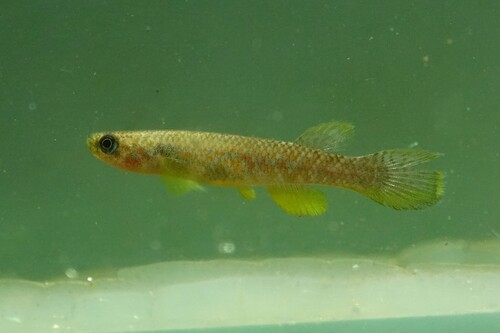
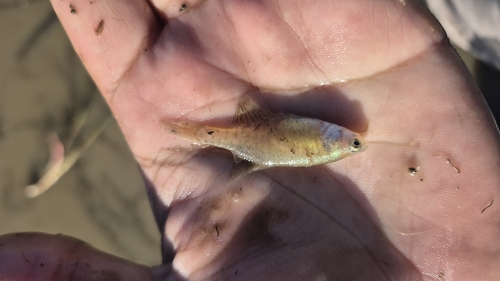
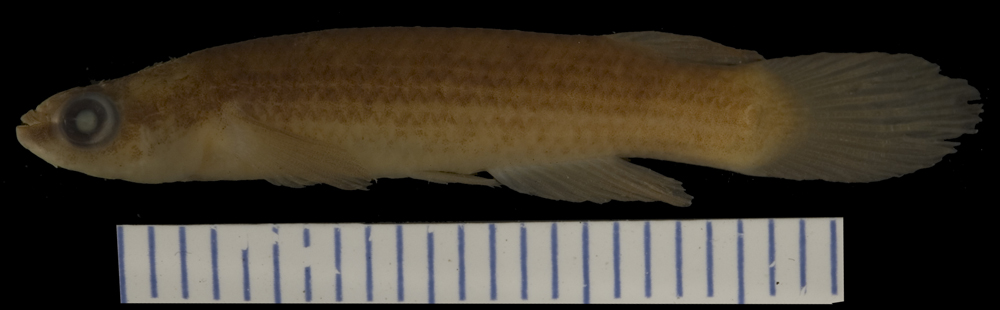
More from the family Rivulidae


Download Fin's Fish Guide
Identify fish in seconds, log your catches and dives. Join the TestFlight beta.