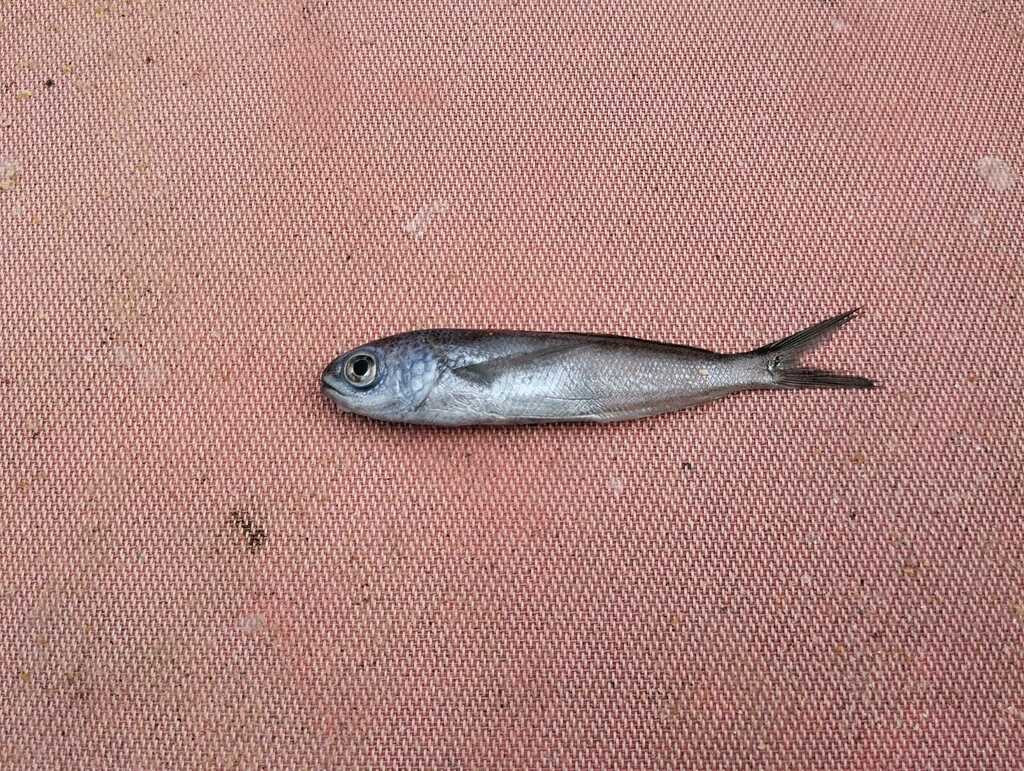
The Driftfish (Cubiceps gracilis) is a saltwater fish of the family Nomeidae that grows up to 107 cm.
Description
The driftfish is an open-ocean fish (family Nomeidae) occurring worldwide in warm and temperate oceans. The species can grow to about a metre and has a streamlined, silvery-brown body with large eyes. It lives oceanically, epipelagic to mesopelagic, in the open water column. Its diet consists mainly of salps and other gelatinous zooplankton. Young fish sometimes shelter near jellyfish or drifting objects. The species is of no fishery value and is harmless to humans. Little is known in detail about its reproduction.
Frequently asked questions
How do you recognise the Driftfish?
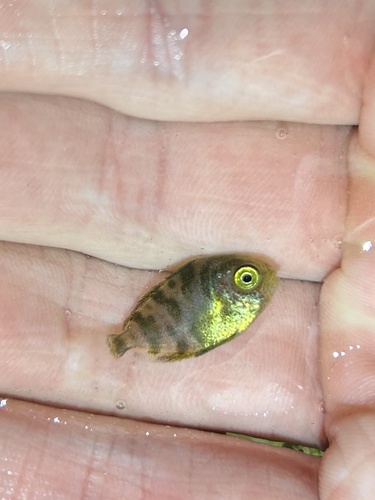
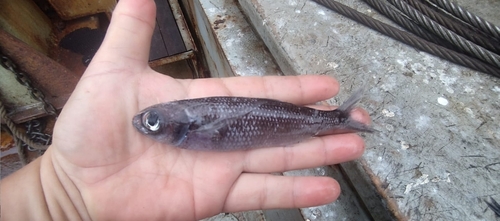
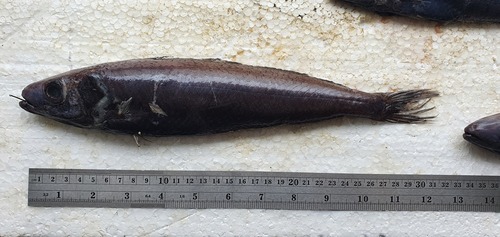
The Driftfish has a torpedo-shaped body, is mainly silver-grey and shows a plain pattern.
Where does the Driftfish live?
The Driftfish lives in the sea (marine waters) and is mostly found around open water.
How big does the Driftfish get?
The Driftfish grows to a maximum of about 107 cm. On average the species is around 18 cm.
Is the Driftfish dangerous to humans?
No, the Driftfish is harmless to humans.
Is the Driftfish edible?
The Driftfish is not usually eaten.
Download Fin's Fish Guide
Identify fish in seconds, log your catches and dives. Join the TestFlight beta.
All data
Identification
Appearance
Habitat & distribution
Behaviour & biology
For anglers
Safety
Status & sources
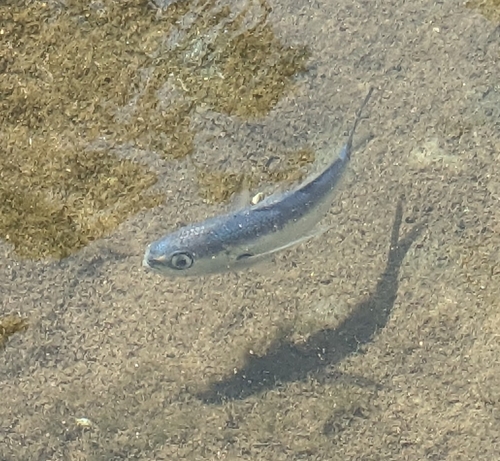
Same genus Cubiceps
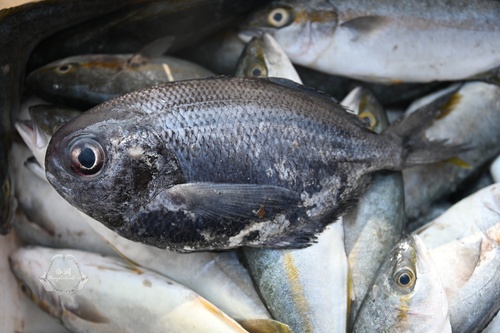
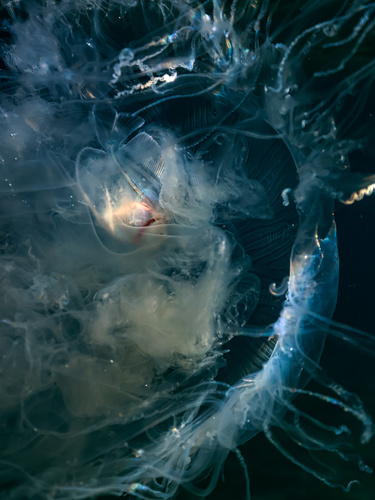
More from the family Nomeidae


Download Fin's Fish Guide
Identify fish in seconds, log your catches and dives. Join the TestFlight beta.