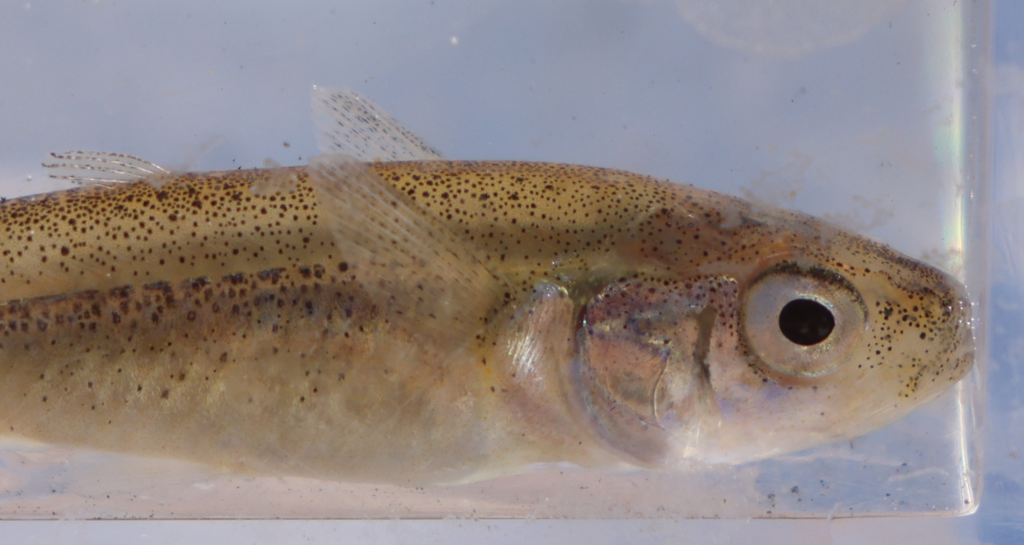
The Lake Eyre hardyhead (Craterocephalus eyresii) is a brackish-water fish of the family Atherinidae that grows up to 10 cm.
Description
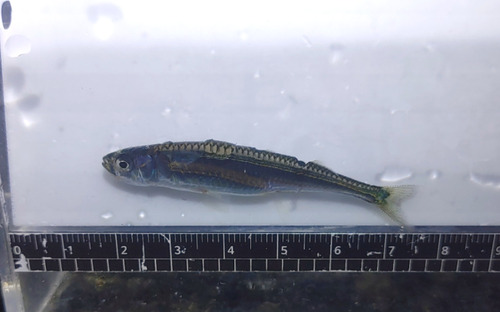
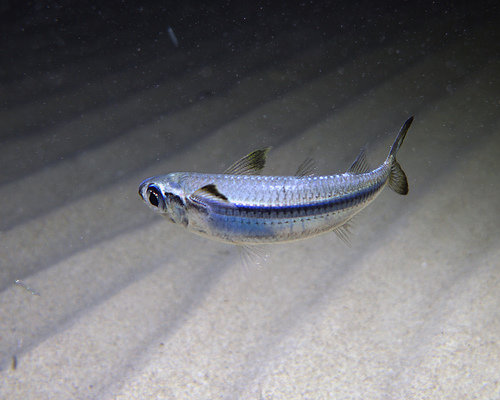
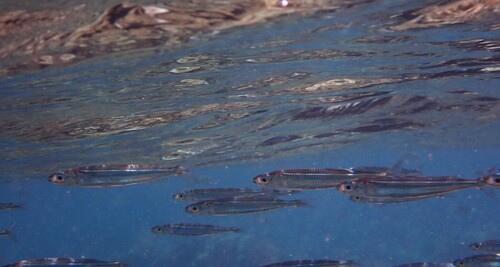
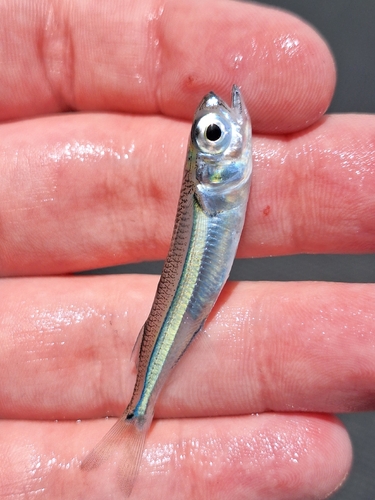
The Lake Eyre hardyhead is a small silverside (Atherinidae) from fresh and brackish water of the arid interior of Australia, including the Lake Eyre basin. The species grows to about 10 cm and has a slender, silvery body with a shiny lateral stripe and tolerates strongly varying salinity and temperature. It lives in schools in pools, lakes and streams and filters small zooplankton and snaps small invertebrates. The fish is harmless to humans.
Frequently asked questions
How do you recognise the Lake Eyre hardyhead?
The Lake Eyre hardyhead has an elongate, eel-like body and is mainly silver-grey.
Where does the Lake Eyre hardyhead live?
The Lake Eyre hardyhead lives in brackish water and is mostly found around mixed bottom.
How big does the Lake Eyre hardyhead get?
The Lake Eyre hardyhead grows to a maximum of about 10 cm.
Is the Lake Eyre hardyhead dangerous to humans?
No, the Lake Eyre hardyhead is harmless to humans.
Download Fin's Fish Guide
Identify fish in seconds, log your catches and dives. Join the TestFlight beta.
All data
Identification
Appearance
Habitat & distribution
Behaviour & biology
For anglers
Safety
Status & sources
Same genus Craterocephalus



More from the family Atherinidae


Download Fin's Fish Guide
Identify fish in seconds, log your catches and dives. Join the TestFlight beta.