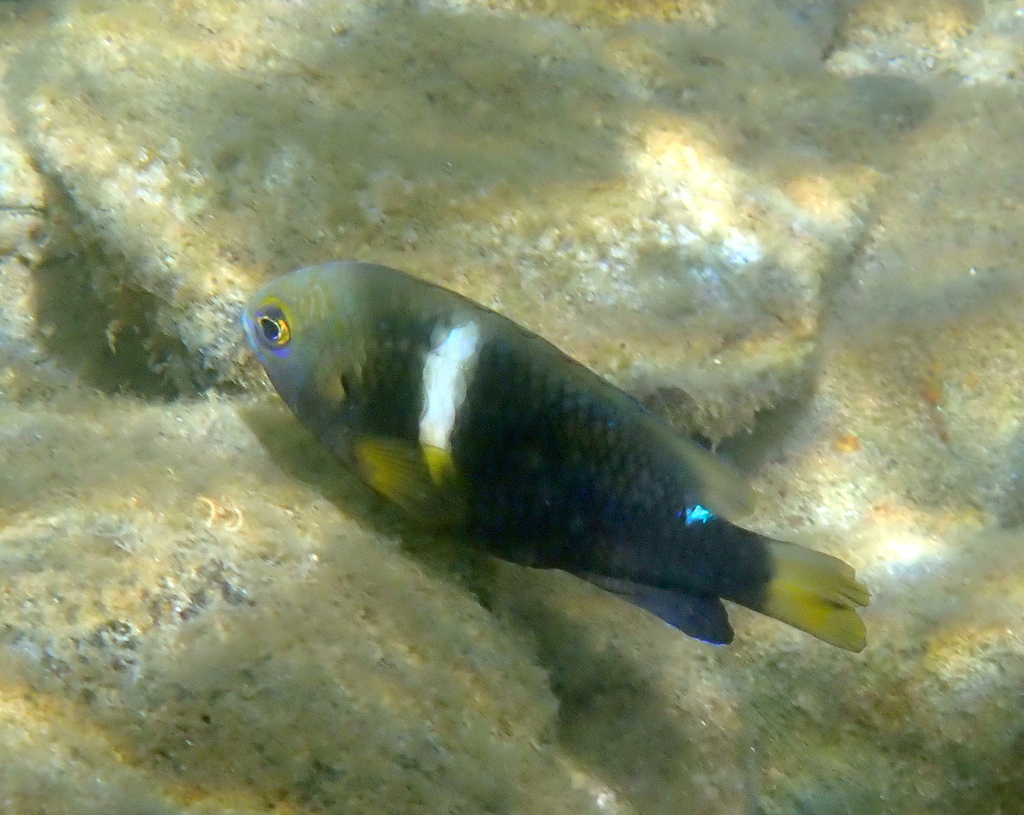
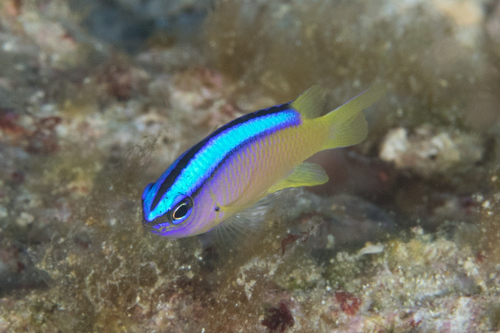
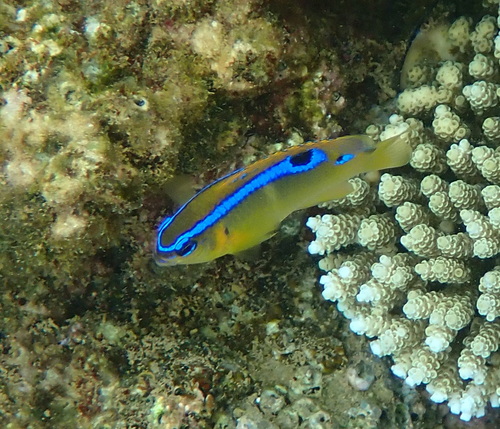
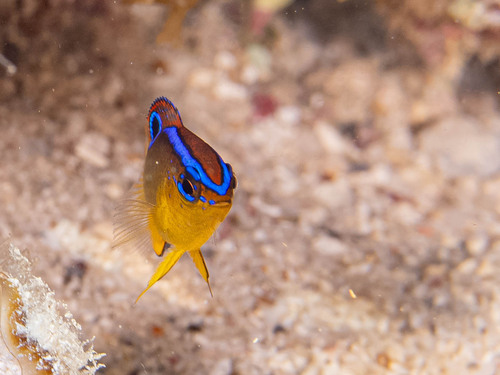
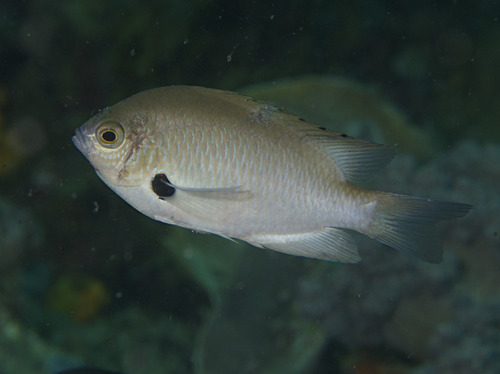
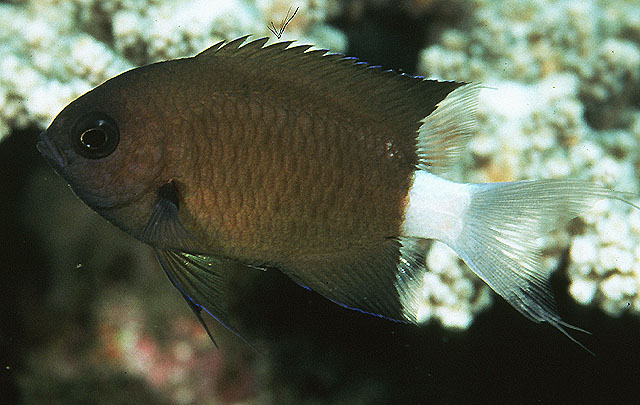
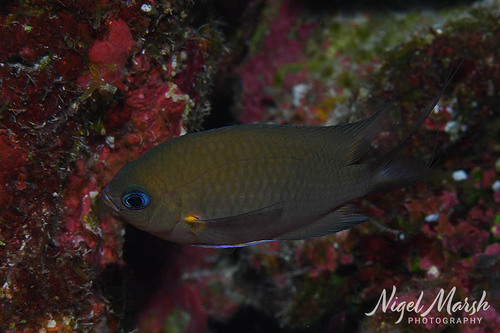
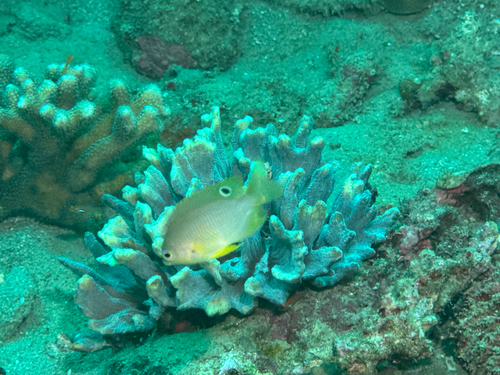
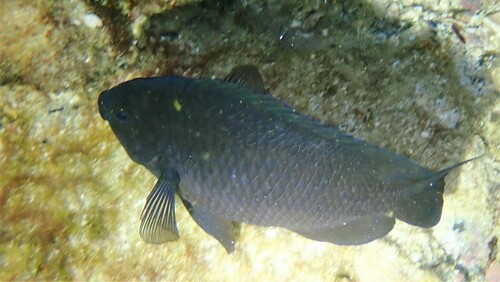
The Deep reef chromis (Chrysiptera biocellata) is a saltwater fish of the family Pomacentridae that grows up to 13 cm.
Description
The twinspot damselfish is a damselfish (family Pomacentridae) of the Indo-Pacific. The species reaches about 12 cm and has a deep, laterally compressed body; adults are usually brownish with a paler rear, while juveniles bear two eyespots (ocelli) on the back, which give the species its name. It inhabits protected inner reef flats, shallow lagoons and channels over rubble and rocky outcrops and is strongly territorial. Its diet consists mainly of filamentous algae. Reproduction occurs in pairs, with the eggs laid on the substrate. The species is harmless to humans.
Frequently asked questions
How do you recognise the Deep reef chromis?
The Deep reef chromis has a flattened, disc-shaped body, is mainly brown and shows a plain pattern.
Where does the Deep reef chromis live?
The Deep reef chromis lives in the sea (marine waters) and is mostly found around stony or rocky ground.
How big does the Deep reef chromis get?
The Deep reef chromis grows to a maximum of about 13 cm.
Is the Deep reef chromis dangerous to humans?
No, the Deep reef chromis is harmless to humans.
Is the Deep reef chromis edible?
The Deep reef chromis is not usually eaten.
Download Fin's Fish Guide
Identify fish in seconds, log your catches and dives. Join the TestFlight beta.
All data
Identification
Appearance
Habitat & distribution
Behaviour & biology
For anglers
Safety
Status & sources
Same genus Chrysiptera
More from the family Pomacentridae
Download Fin's Fish Guide
Identify fish in seconds, log your catches and dives. Join the TestFlight beta.