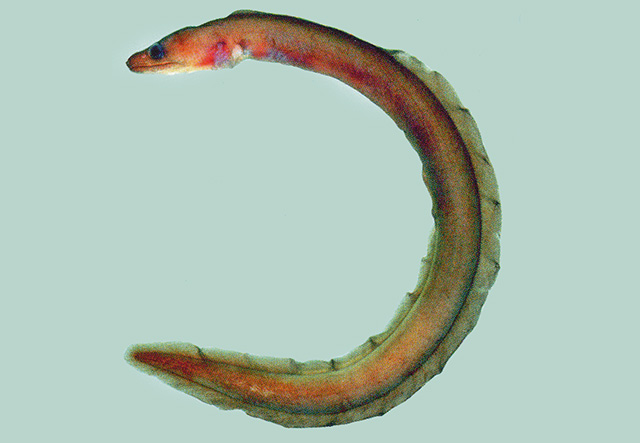
The Longtooth snake eel (Boehlkenchelys longidentata) is a saltwater fish of the family Chlopsidae that grows up to 20 cm.
Description
The longtooth snake eel is a snake eel (Ophichthidae) from shallow sand and coastal water of the Indo-West Pacific. The species grows to about 30 cm and has a slender, eel-like, pale body with conspicuously long teeth and a hard, pointed tail with which it burrows backwards into sand. As a nocturnal bottom-dweller it lies hidden by day with only its head out of the sand and seizes small fish and crustaceans at night. The fish is harmless to humans.
Frequently asked questions
How do you recognise the Longtooth snake eel?
The Longtooth snake eel has an elongate, eel-like body and is mainly white.
Where does the Longtooth snake eel live?
The Longtooth snake eel lives in the sea (marine waters) and is mostly found around sand or mud bottom.
How big does the Longtooth snake eel get?
The Longtooth snake eel grows to a maximum of about 20 cm.
Is the Longtooth snake eel dangerous to humans?
No, the Longtooth snake eel is harmless to humans.
Download Fin's Fish Guide
Identify fish in seconds, log your catches and dives. Join the TestFlight beta.
All data
Identification
Appearance
Habitat & distribution
Behaviour & biology
For anglers
Safety
Status & sources
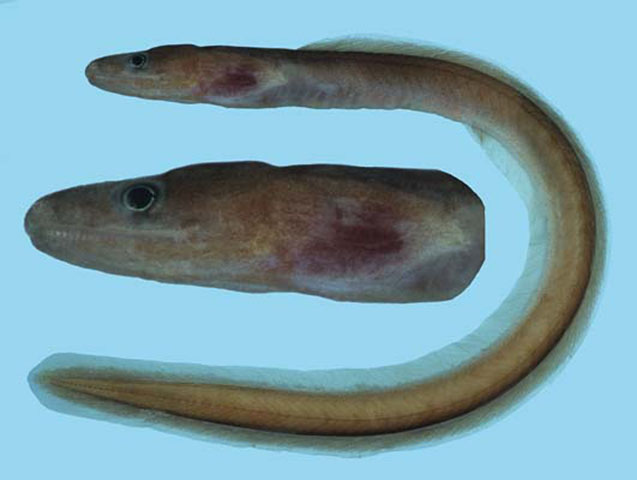
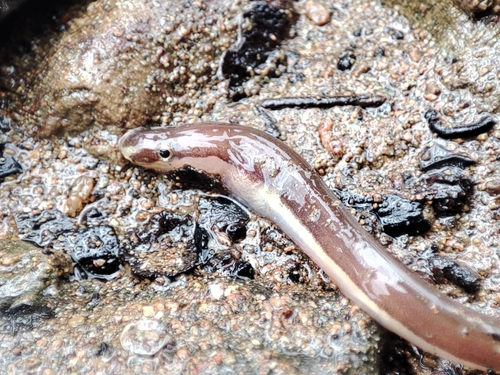
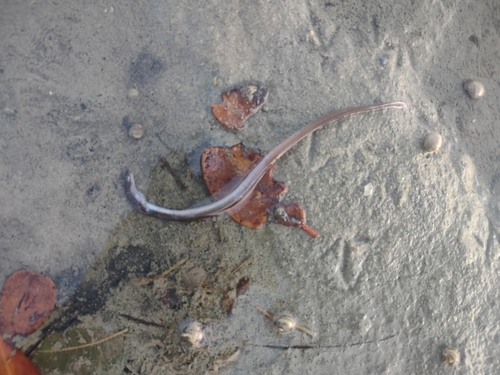
More from the family Chlopsidae





Download Fin's Fish Guide
Identify fish in seconds, log your catches and dives. Join the TestFlight beta.