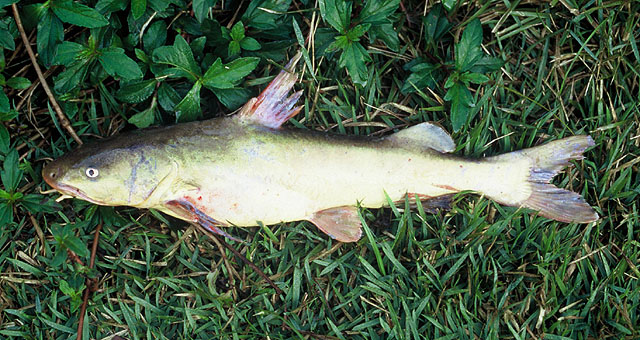
The Lung-bladder sea catfish (Aspistor luniscutis) is a fish of the family Ariidae that grows up to 35 cm.
Description
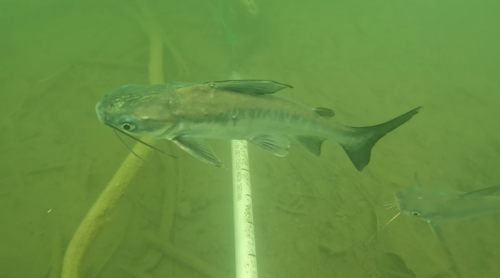
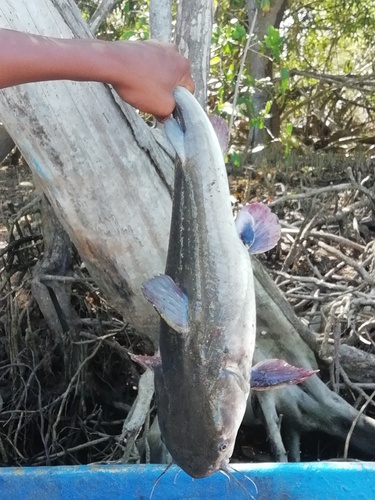
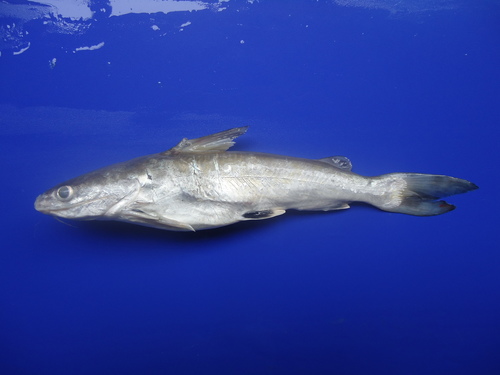
The Lung-bladder sea catfish is a sea catfish (Ariidae) from turbid coastal and estuarine water of the western Atlantic off Brazil. The species grows to about 35 cm and has a sturdy, greyish, scaleless body with three pairs of barbels and an adipose fin. As a bottom-dweller it searches over sand and mud for worms, crustaceans, molluscs and small fish; the male broods the large eggs in his mouth. The dorsal and pectoral spines are venomous and can give a painful puncture wound.
Frequently asked questions
How do you recognise the Lung-bladder sea catfish?
The Lung-bladder sea catfish is mainly silver-grey.
Where does the Lung-bladder sea catfish live?
The Lung-bladder sea catfish is mostly found around sand or mud bottom.
How big does the Lung-bladder sea catfish get?
The Lung-bladder sea catfish grows to a maximum of about 35 cm.
Is the Lung-bladder sea catfish dangerous to humans?
The Lung-bladder sea catfish is venomous — handle spines with care and seek medical help after a sting if needed.
Download Fin's Fish Guide
Identify fish in seconds, log your catches and dives. Join the TestFlight beta.
All data
Identification
Appearance
Habitat & distribution
Behaviour & biology
For anglers
Safety
Status & sources
Same genus Aspistor
More from the family Ariidae

Download Fin's Fish Guide
Identify fish in seconds, log your catches and dives. Join the TestFlight beta.