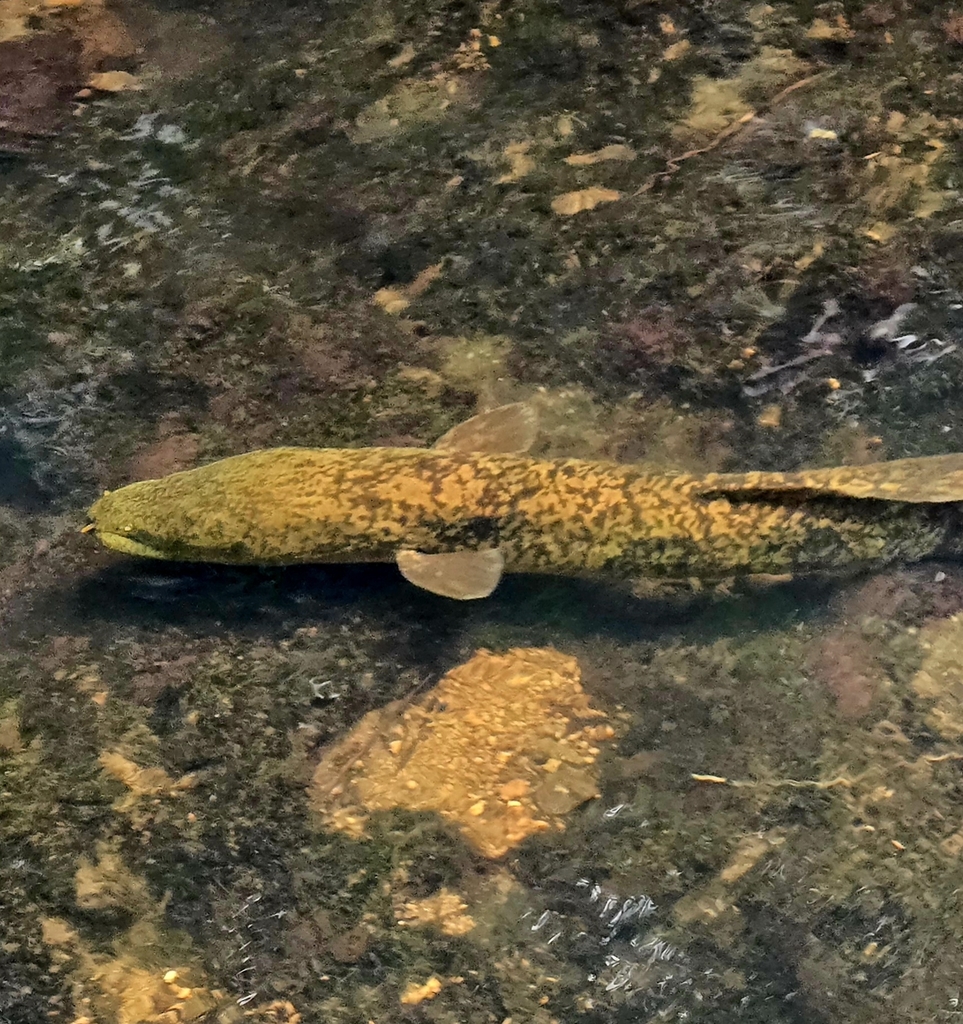
The Eel (Anguilla marmorata) is a fish that lives in both fresh and salt water of the family Anguillidae that grows up to 70 cm.
Description
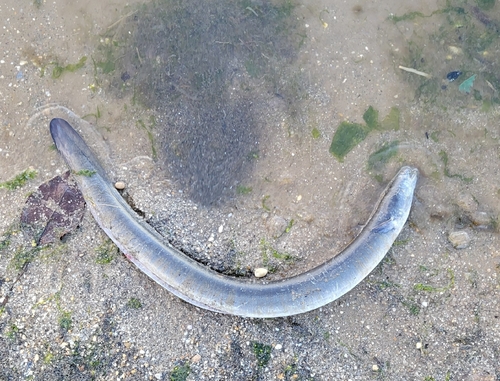
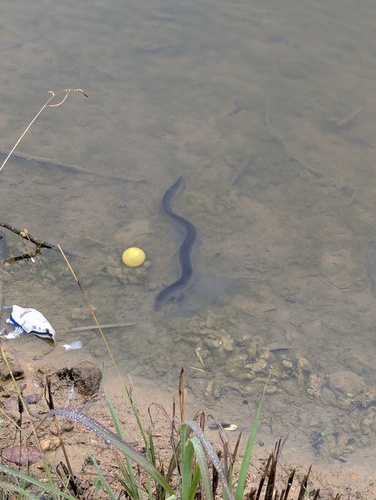
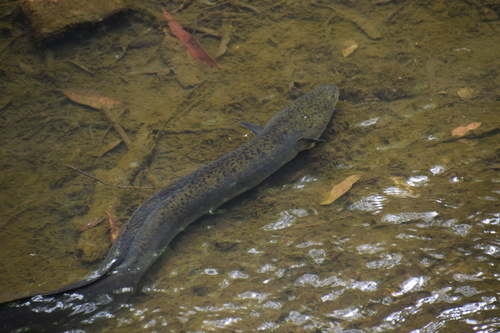
The giant mottled eel is the largest tropical freshwater eel, of the family Anguillidae, and is widely distributed across the Indo-Pacific. The species has an elongate, snake-like body with a yellow-brown mottling and reaches about 70 cm, sometimes considerably more. Adults live in rivers and headwaters, while juveniles and mature individuals migrate to the sea. The species is catadromous: it spawns in deep sea gullies near the Philippines, Indonesia and Papua New Guinea. At night it hunts crabs, frogs and fishes. The eel is a prized food fish and can live for several decades.
Frequently asked questions
How do you recognise the Eel?
The Eel has a snake-like body, is mainly brown and shows a marbled pattern.
Where does the Eel live?
The Eel lives in both fresh and salt water and is mostly found around sand or mud bottom.
How big does the Eel get?
The Eel grows to a maximum of about 70 cm. On average the species is around 26 cm.
Is the Eel dangerous to humans?
No, the Eel is harmless to humans.
Is the Eel edible?
Yes, the Eel is commonly eaten.
Download Fin's Fish Guide
Identify fish in seconds, log your catches and dives. Join the TestFlight beta.
All data
Identification
Appearance
Habitat & distribution
Behaviour & biology
For anglers
Safety
Status & sources
Same genus Anguilla
More from the family Anguillidae

Download Fin's Fish Guide
Identify fish in seconds, log your catches and dives. Join the TestFlight beta.