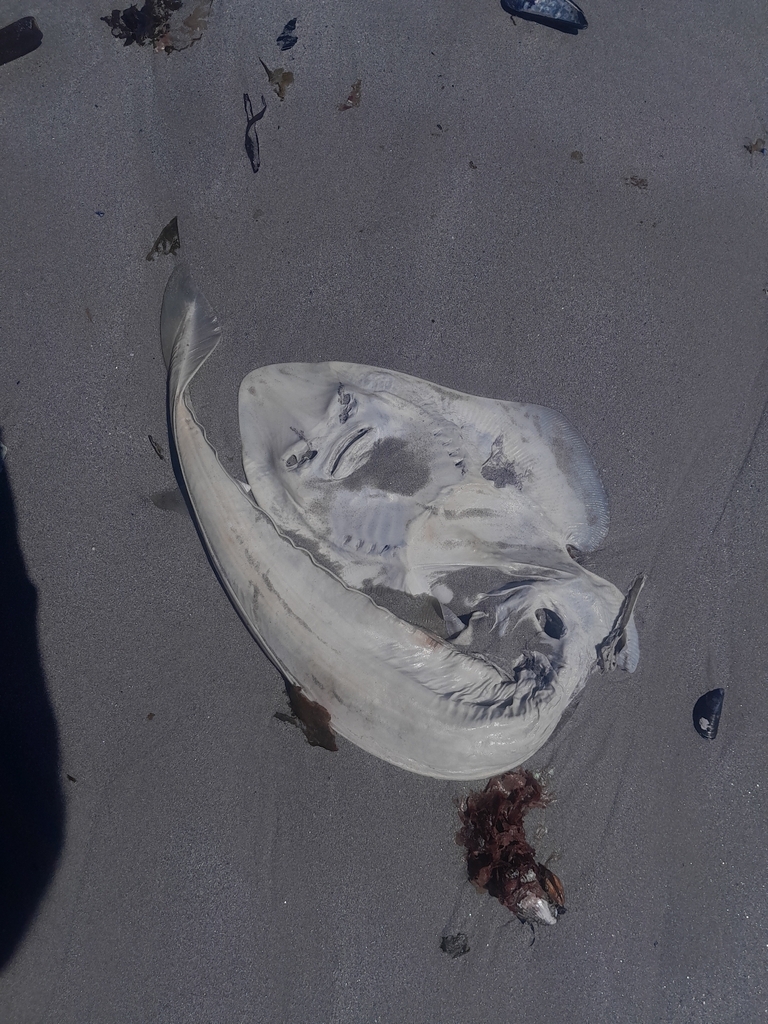
The Bluntnose fiddlefish (Acroteriobatus blochii) is a saltwater fish of the family Rhinobatidae that grows up to 100 cm.
Description
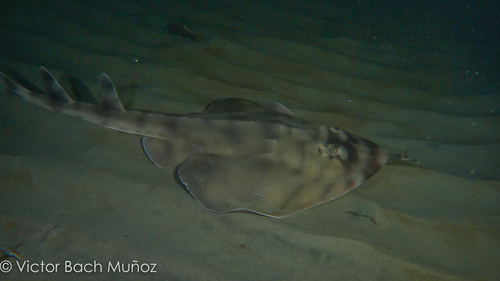
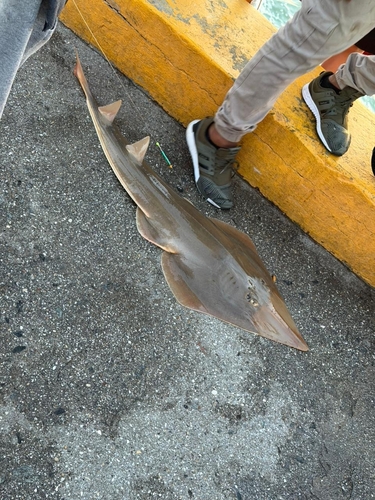
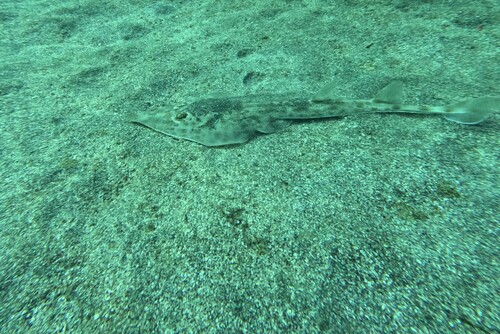
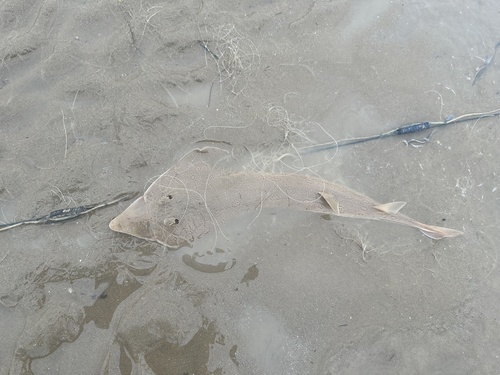
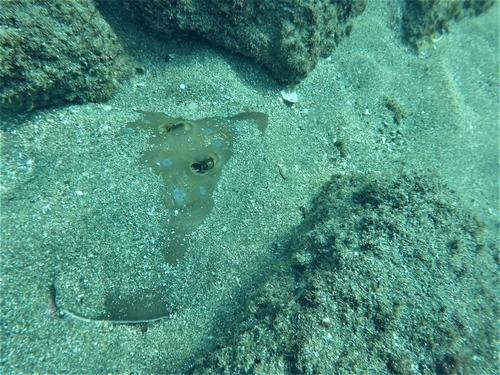
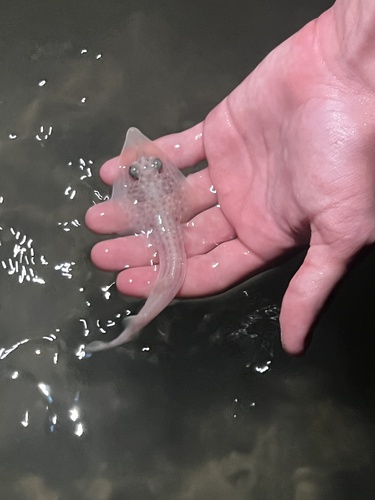
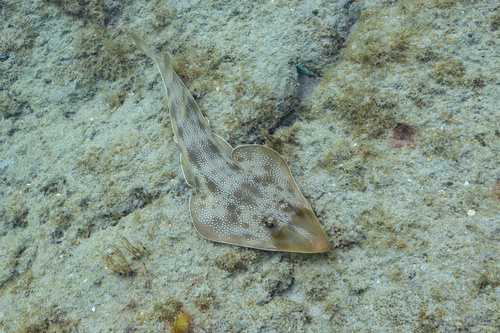
Bloch's guitarfish is a guitarfish from the western Indian Ocean, off the coast of southern Africa. The species grows to about 100 cm and has a form between shark and ray: a flattened, angular front with a blunt snout and a powerful, shark-like rear body with a well-developed tail. Unlike stingrays it lacks a venomous spine. As a bottom-dweller it often lies half-buried in sand and mud bottoms of shallow coastal water and searches for molluscs, crustaceans and small fish. The fish is harmless to humans. The IUCN assesses the species as Least Concern (LC).
Frequently asked questions
How do you recognise the Bluntnose fiddlefish?
The Bluntnose fiddlefish has an elongate, eel-like body, is mainly brown and shows a plain pattern.
Where does the Bluntnose fiddlefish live?
The Bluntnose fiddlefish lives in the sea (marine waters) and is mostly found around stony or rocky ground.
How big does the Bluntnose fiddlefish get?
The Bluntnose fiddlefish grows to a maximum of about 100 cm.
Is the Bluntnose fiddlefish dangerous to humans?
No, the Bluntnose fiddlefish is harmless to humans.
Is the Bluntnose fiddlefish edible?
The Bluntnose fiddlefish is rarely eaten.
Download Fin's Fish Guide
Identify fish in seconds, log your catches and dives. Join the TestFlight beta.
All data
Identification
Appearance
Habitat & distribution
Behaviour & biology
For anglers
Safety
Status & sources
Same genus Acroteriobatus
More from the family Rhinobatidae
Download Fin's Fish Guide
Identify fish in seconds, log your catches and dives. Join the TestFlight beta.