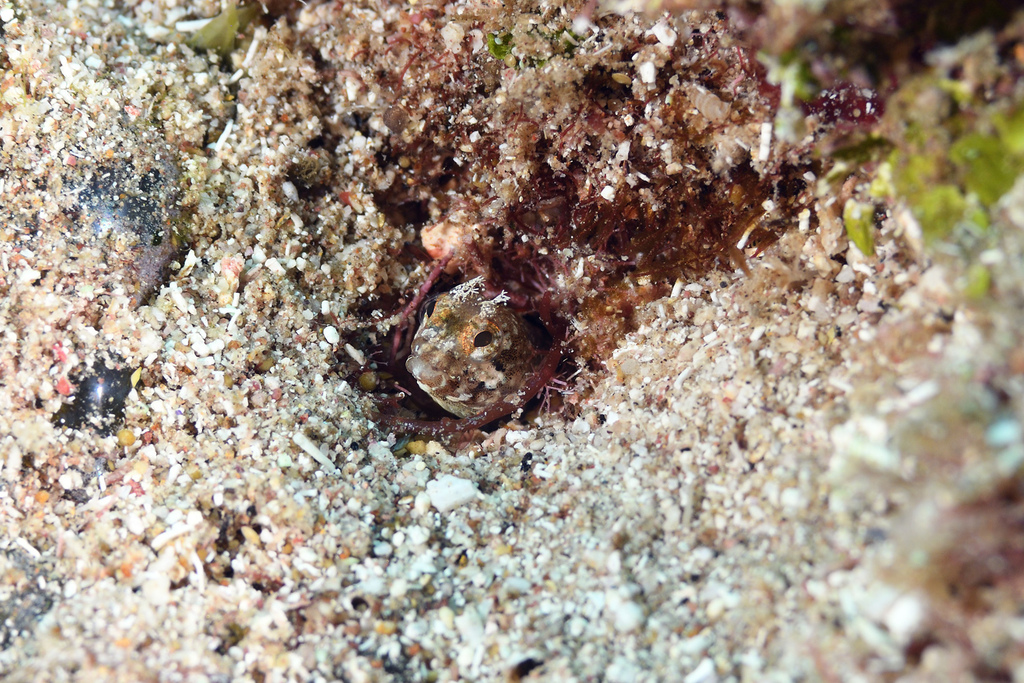
The Papillose blenny (Acanthemblemaria chaplini) is a saltwater fish of the family Chaenopsidae that grows up to 5 cm.
Description
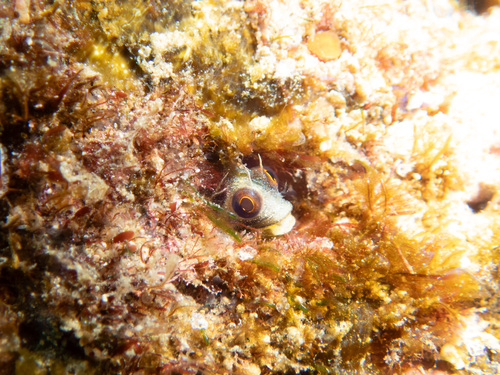
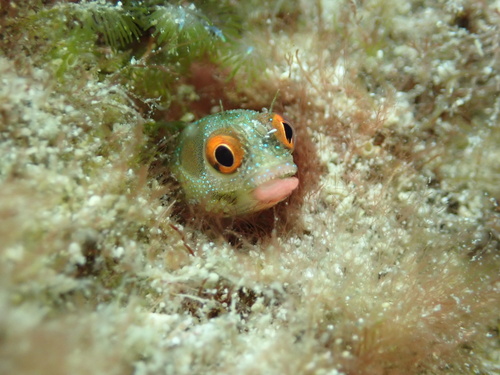
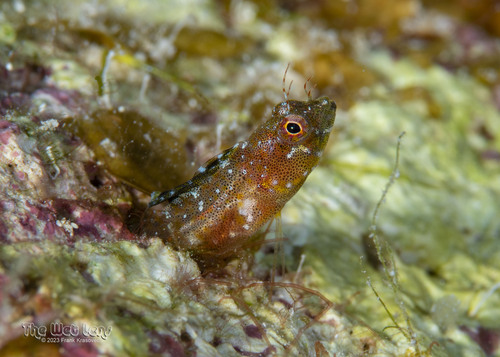
The papillose blenny is a very small blenny from the western Atlantic, known from southeastern Florida and the Bahamas. It reaches at most about 4.5 cm and has an elongate, scaleless body with a large head and strong, canine-like teeth. A distinctive feature is a row of three to six blunt papillae along the edge of the interorbital region, together with branched head cirri. The fish lives on limestone slopes and patch reefs at 2 to 12 metres depth, often inside empty worm tubes or small holes from which it darts out to seize passing prey. The IUCN assesses it as Least Concern (LC).
Frequently asked questions
How do you recognise the Papillose blenny?
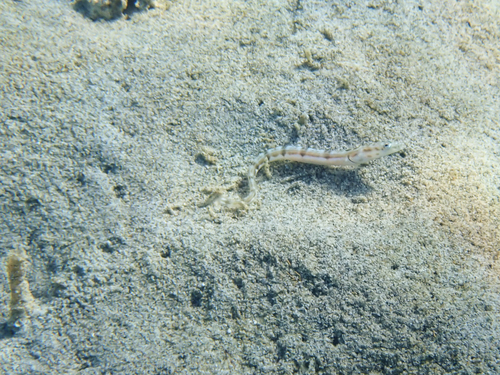
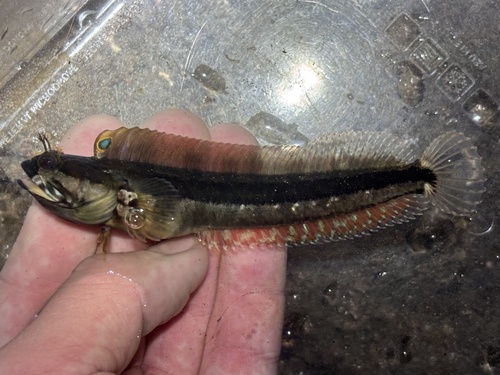
The Papillose blenny has an elongate, eel-like body, is mainly brown and shows a marbled pattern.
Where does the Papillose blenny live?
The Papillose blenny lives in the sea (marine waters) and is mostly found around sand or mud bottom.
How big does the Papillose blenny get?
The Papillose blenny grows to a maximum of about 5 cm.
Is the Papillose blenny dangerous to humans?
No, the Papillose blenny is harmless to humans.
Is the Papillose blenny edible?
The Papillose blenny is not usually eaten.
Download Fin's Fish Guide
Identify fish in seconds, log your catches and dives. Join the TestFlight beta.
All data
Identification
Appearance
Habitat & distribution
Behaviour & biology
For anglers
Safety
Status & sources
Same genus Acanthemblemaria

More from the family Chaenopsidae
Download Fin's Fish Guide
Identify fish in seconds, log your catches and dives. Join the TestFlight beta.